
 Stephanie Carrick
An expert report by University of Sydney ecologist Professor Mathew Crowther, prepared for our network partner Save Sydney’s Koalas and the Environmental Defenders Office, has found that the Cumberland Plain Conservation Plan (CPCP) is likely to significantly impact Habitat Critical to the Survival of the Koala (HCSK) as defined in the National Recovery Plan for the Koala, in particular east–west corridors essential for koala movement, dispersal, gene flow and meta-population processes in the Campbelltown population.
Professor Mathew Crowther’s findings are particularly significant given his previous role on the NSW Chief Scientist & Engineer’s Independent Expert Panel established to assess the adequacy of koala protection measures within the CPCP’s Wilton and Greater Macarthur Growth Areas.

Figure 1: Important Koala Habitat as mapped in CPCP Sub Plan B, much of which will be cleared, modified or fragmented.
The report identified 304 hectares of mapped habitat critical to the survival of the koala will be lost within the Wilton and Greater Macarthur Growth Areas. It further identifies the loss of approximately 242 hectares of important primary, secondary, and tertiary habitat corridors and found significant deviations between the CPCP assessment and the National Koala Recovery Plan, including reliance on habitat suitability rather than HCSK criteria, incomplete koala records and the use of offsets to justify habitat loss despite offsets being excluded from the Recovery Plan’s habitat-gain objectives. It also highlights that corridor severance from roads and housing, delayed revegetation, uncertain crossing effectiveness, inadequate fencing and the population’s low genetic diversity mean mitigation and offsets cannot adequately compensate for the immediate and potentially irreversible loss of functional habitat and connectivity.
Key Findings from the Crowther Expert Report:
- Breach of Federal Recovery Objectives: The CPCP violates Objective 1B of the National Koala Recovery Plan which requires a net increase in habitat (excluding offsets) every five years and the maintenance of stable populations. Offsets cannot replace immediate, irreversible corridor destruction.
- Mallaty Creek Corridor Omitted & Severed: The Chief Scientist’s Report recognised 6 koala crossings along Appin Road - 4 remain unbuilt. Three koala deaths have recently occurred at the missing Mallaty Creek crossing point.
- Severe Landscape Fragmentation: Cutting primary (120 ha) and secondary (106 ha) corridors disrupts meta-population processes, isolating male koalas requiring ~50 ha home ranges and blocking juvenile dispersal.
- Synergistic Extinction Risks: Low genetic diversity, disrepair of exclusion fencing (e.g.,Picton Road), and the late-2024 detection of Chlamydia mean further habitat loss poses an existential threat to Sydney's last expanding koala population.
To address the failure to the CPCP to meet the National Koala Recovery Plan, the CPCP should be strengthened through an independent reassessment of Habitat Critical to the Survival of the Koala, legal protection of ALL functional east–west corridors including Mallaty Creek, minimum corridor-width standards consistent with Chief Scientist advice, and mandatory delivery of wildlife crossings and associated fencing before development impacts occur.
- Build 4 Koala crossings on Appin Road as recognised in the Chief Scientist’s Report need to be built before any more development: that is, Beulah, Mallaty, Ousedale, Elladale in addition to Noorumba which still lacks vegetation. Formally incorporate and secure full, connected protection for the Mallaty Creek east-west koala corridor in local and strategic planning instruments.
- All Koala corridors east-west and north-south meet the Chief Scientist ‘s recommendations: That is an average minimum of 390m–425m widths, and an absolute minimum corridor width of 250m. That is, A (Menangle Creek), B (Woodhouse Creek), C
(Nepean Creek), D (Mallaty Creek), E (Ousedale Creek) and F (Elladale Creek) and along the Nepean River. Suspend Section 146B activity approvals under the CPCP until independent mapping guarantees zero loss of functional koala corridors. - Fix Safety Fencing & Crossings: Immediately fund and repair broken exclusion fencing along Picton Road and build a functional wildlife crossing at the Mallaty Creek Appin Road blackspot.
- Reject all CPCP modifications to Koala Habitat
Saul Deane, campaigner for the Total Environment Centre and member of Save Sydney's Koalas said: "Professor Crowther’s report confirms what local communities have feared: the CPCP is not a conservation plan, it is a blueprint for local extinction. While the NSW Government promises protection, koalas are dying on Appin Road because vital linkages like Mallaty Creek were ignored and left open to bulldozers. You cannot offset an endangered koala corridor that has been turned into a housing estate."
Damaging CPCP Modifications further Koala habitat destruction
Rather the improve the CPCP, the Department of Planning have recommended a slew of more damaging modifications to koala habitat impacting every east-west Koala corridor. The Sydney Basin Koala Network strongly objects to the proposed Cumberland Plain Conservation Plan (CPCP) modifications, as they underestimate cumulative impacts and allow further fragmentation and loss of koala habitat and critically endangered ecological communities through inappropriate “avoided land” and offsetting arrangements. The NSW Government is allowing CPCP modifications through its established amendment process, but repeated site-by-site changes are progressively weakening the biodiversity principals of the plan by increasing development opportunities, reducing koala habitat and corridor protection, and undermining its original landscape-scale conservation objectives.
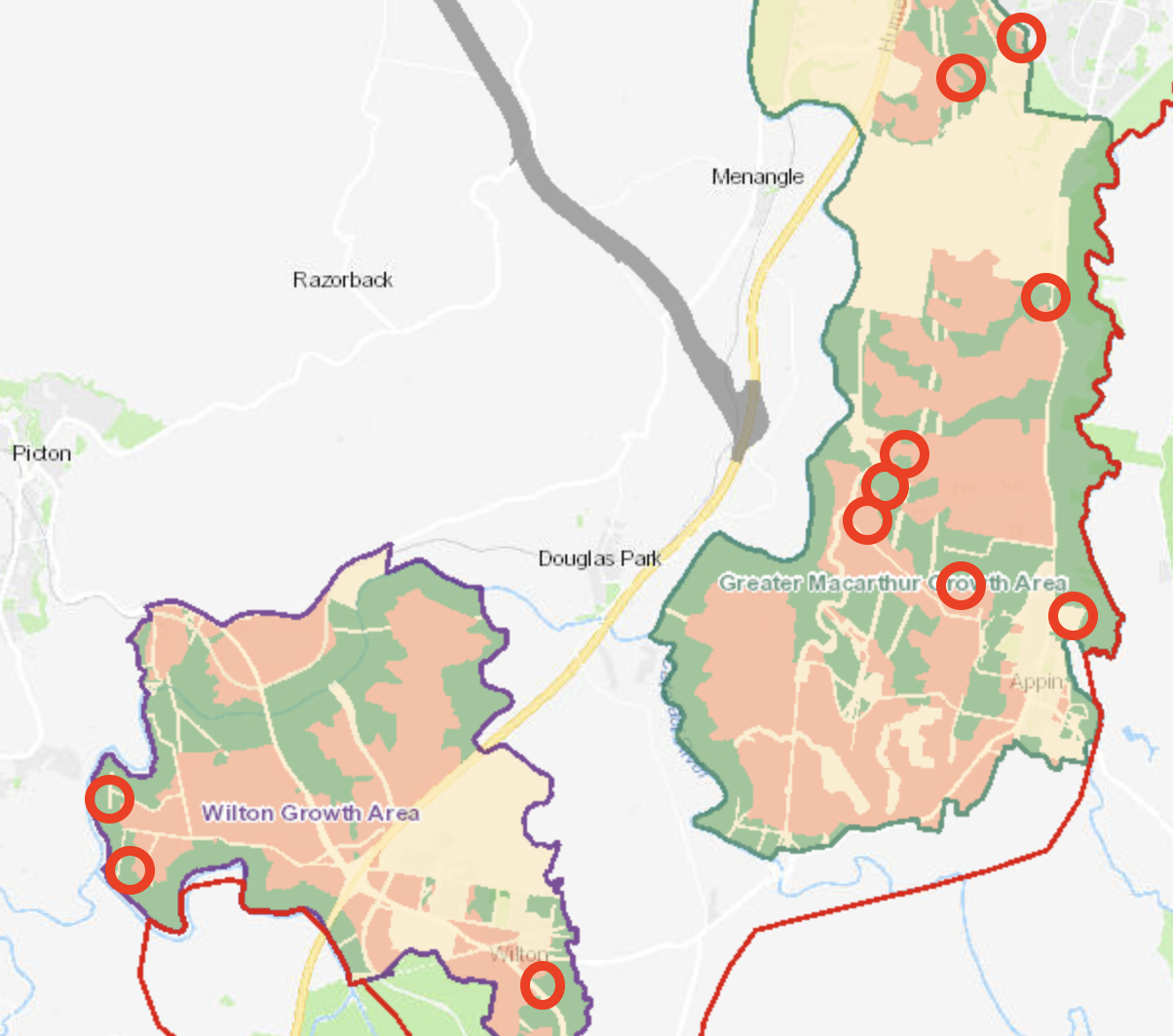
Figure 2: Cumulative Impacts of CPCP modifications impacting every East-West koala corridor
There are many options available to Environment Minister to prevent the CPCP significant, serious and irreversible impacts on the Koala. The 2027 five-year review provides a critical opportunity to incorporate Professor Crowther's new scientific information, address deficiencies in the original assessment and ensure that habitat loss and corridor fragmentation are avoided rather than retrospectively compensated through offsets.
EMAIL NSW ENVIRONMENT MINISTER PENNY SHARPE and ask for her to revoke the CPCP Certification Order and implement our recommendations.